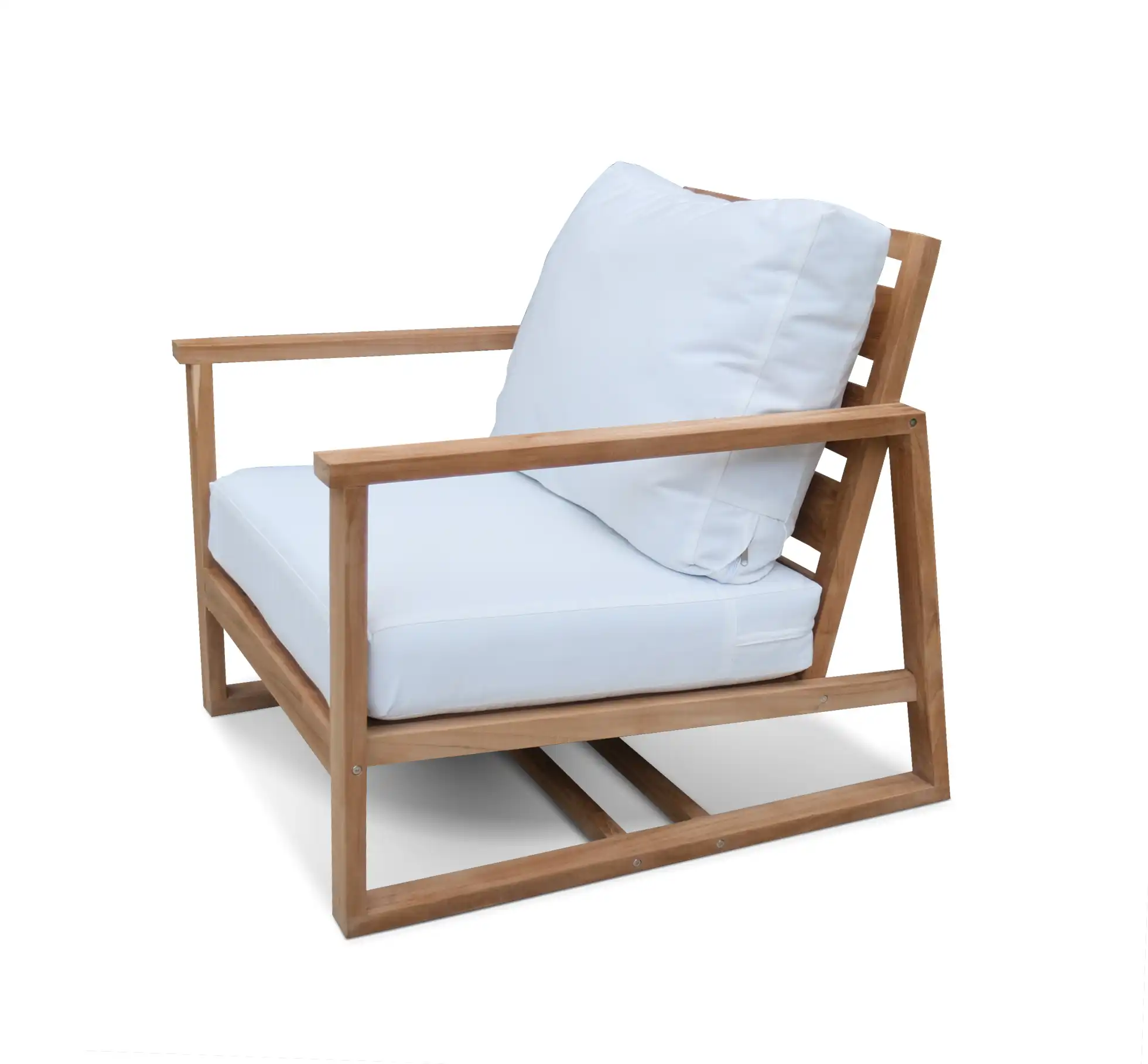
Grade A teak is the benchmark for outdoor furniture that has to last. However, two chairs can look almost the same in a photo and still perform very differently after a few rainy seasons. The difference usually comes down to which part of the log the wood came from. This guide explains how teak grading works, how to check quality on a sample, and what to ask before you sign a purchase order.
We wrote it for importers, retailers and project buyers who source from Indonesia. If you are still choosing between your own designs and ours, read our guide to OEM vs ODM teak furniture first.
What does grade A teak mean?
Teak grading describes the position of the wood inside the log. For example, a mature teak tree has a dense, oily heartwood at its core. Meanwhile, a lighter sapwood layer sits around it, near the bark. The heartwood holds most of the natural oil, and that oil is what protects teak from water, insects and rot.
Grade A teak comes from the mature heartwood. It has an even golden-brown color, a tight grain and very few knots. By contrast, grade B comes from the outer heartwood, so it has less oil and a less uniform color. Grade C includes sapwood, which is pale, soft and far less durable outdoors.
There is no single international grading standard. As a result, suppliers use these terms in slightly different ways. That is why you should always ask how a factory defines each grade.
Grade A, B and C teak side by side
| Grade A | Grade B | Grade C | |
|---|---|---|---|
| Part of the log | Mature heartwood | Outer heartwood | Sapwood and mixed wood |
| Color | Even golden brown | Lighter, less uniform | Pale with visible streaks |
| Natural oil | High | Moderate | Low |
| Grain and knots | Tight grain, few knots | Looser grain, more knots | Open grain, many knots |
| Outdoor durability | Excellent | Fair, needs more care | Poor |
Why grade A teak matters for outdoor use
Indoors, a lower grade can look acceptable for years. Outdoors, however, sun, rain and humidity expose every weakness. Because grade A teak carries more natural oil, it stays stable and resists rot without heavy chemical treatment.
For a retailer, this means fewer complaints and fewer returns. For a hotel or resort, it means a consistent look across hundreds of pieces and a longer replacement cycle. In short, the cheaper chair is only cheaper until the first replacement order.
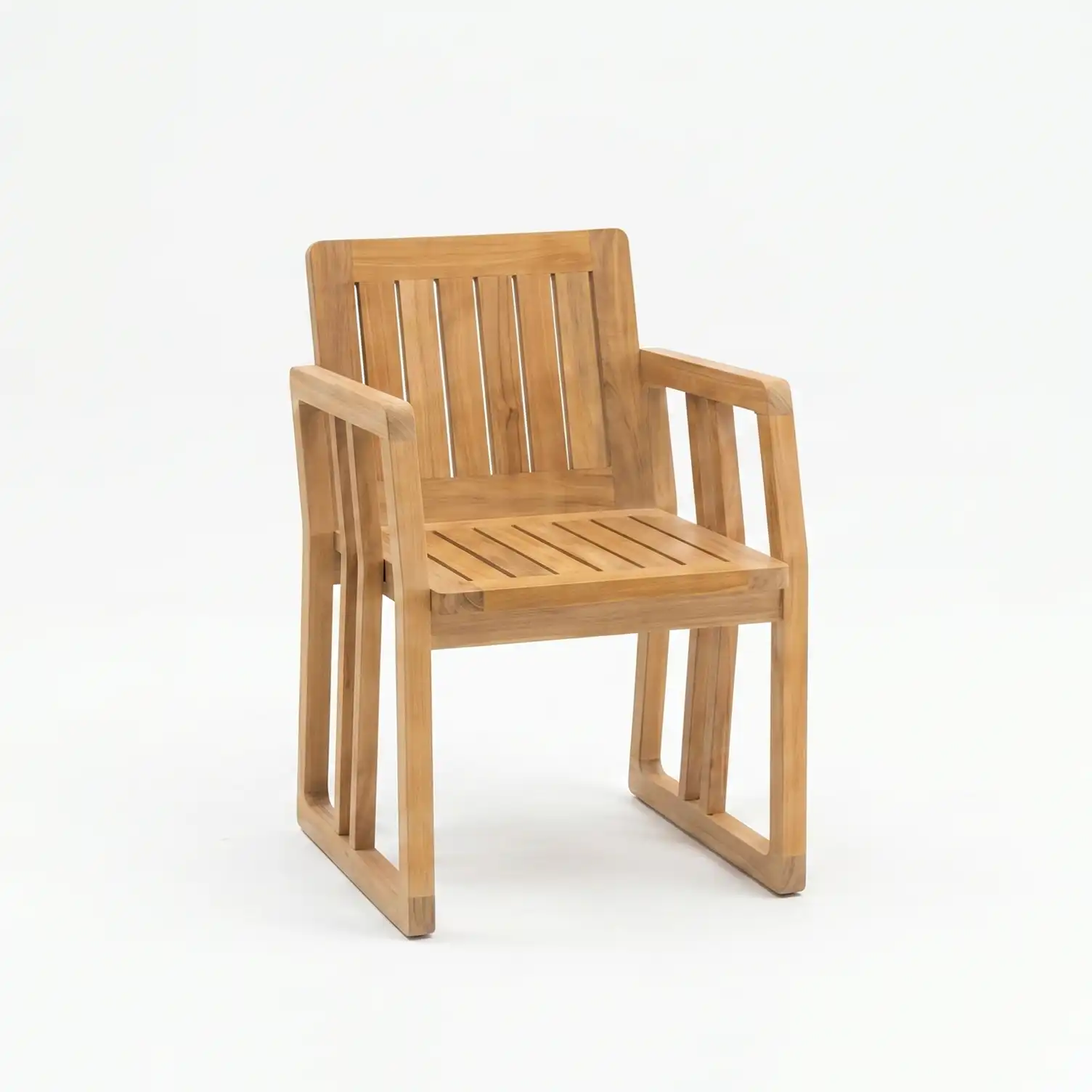
How to check teak quality on a sample
You do not need a laboratory to spot the difference. Instead, ask for a sample and check these five points.
- Color consistency. First, look along every slat and leg. Pale stripes or patches usually point to sapwood.
- Weight. Heartwood is dense. A chair made from grade A teak feels noticeably heavier than one made from lower grades.
- Touch and smell. Freshly sanded heartwood feels smooth and slightly oily. It also has a faint, leathery scent.
- Grain and knots. Start with joints and load-bearing parts. You want a tight, straight grain with few knots.
- Hidden parts. Finally, turn the piece over. Some factories use good wood on visible surfaces and lower grades underneath.
Questions to ask your teak supplier
A good supplier will answer these questions clearly and in writing. If the answers are vague, treat that as a warning sign.
- How do you define grade A, B and C teak in your factory?
- Does the grade apply to the whole piece, including frames and legs?
- What moisture content do you dry the wood to before production?
- Can you state the grade per item on the proforma invoice?
- Can you provide timber legality documents, such as an SVLK certificate?
Moisture content matters as much as grade. For instance, wood that is not dried properly can crack or move after it reaches a different climate. Therefore, ask about the kiln-drying process and how the factory checks it.
Is plantation teak lower quality?
Not necessarily. Most export teak today comes from managed plantations, including the long-established teak forests of Java. When trees are harvested at maturity, plantation logs still yield excellent heartwood. Moreover, plantation timber is the legal and sustainable source that most international buyers now require.
Above all, what matters is the age of the tree and how the factory selects and grades each board. Young, fast-grown logs have more sapwood. For this reason, careful selection at the sawmill is just as important as the origin of the wood.
How we use grade A teak at Teak Republic
At our workshop in Jepara, Central Java, we build our outdoor collections from solid grade A teak. Each board is selected and checked before it goes into production. Then every finished piece is inspected again before packing.
You can see the result across our teak furniture collections, from deep seating to dining chairs such as the Botana Bali Chair. In addition, we state the wood grade on every quotation, so you always know what you are buying.
Want to learn more about the species itself? The Tectona grandis entry gives a good botanical overview.
Request samples of our grade A teak furniture
In the end, the best way to judge quality is to see and touch it. Send us the models you are interested in, and we will advise on samples, pricing and lead times. Contact our export team or message us on WhatsApp at +62 811 277 789.
For more practical sourcing advice, browse the rest of the Teak Republic blog.